
Solid Gold vs Gold Filled Men UK 2027
A "gold filled" chain isn't actually filled with gold.

That’s the first thing most UK buyers learn the wrong way around. The term is a US-derived specification meaning “a layer of solid gold mechanically bonded to a base metal core”. The chain’s outer surface is real gold (14K or higher) at significant thickness (typically 100+ microns), bonded to a brass or copper core. The total gold weight is regulated, must be at least 1/20th (5%) of the piece’s total weight.
Solid gold means the entire piece is gold alloy throughout, no base metal core. The same 14K alloy (or 9K, 18K) extends from the surface to the core.
Both are “real gold” pieces, but in different senses. This is the side-by-side for UK men in 2026.
I run Monrich, a UK men’s jewellery brand. Disclosure first. Monrich does not offer solid gold or gold filled currently; the catalogue is PVD-plated 316L stainless steel.
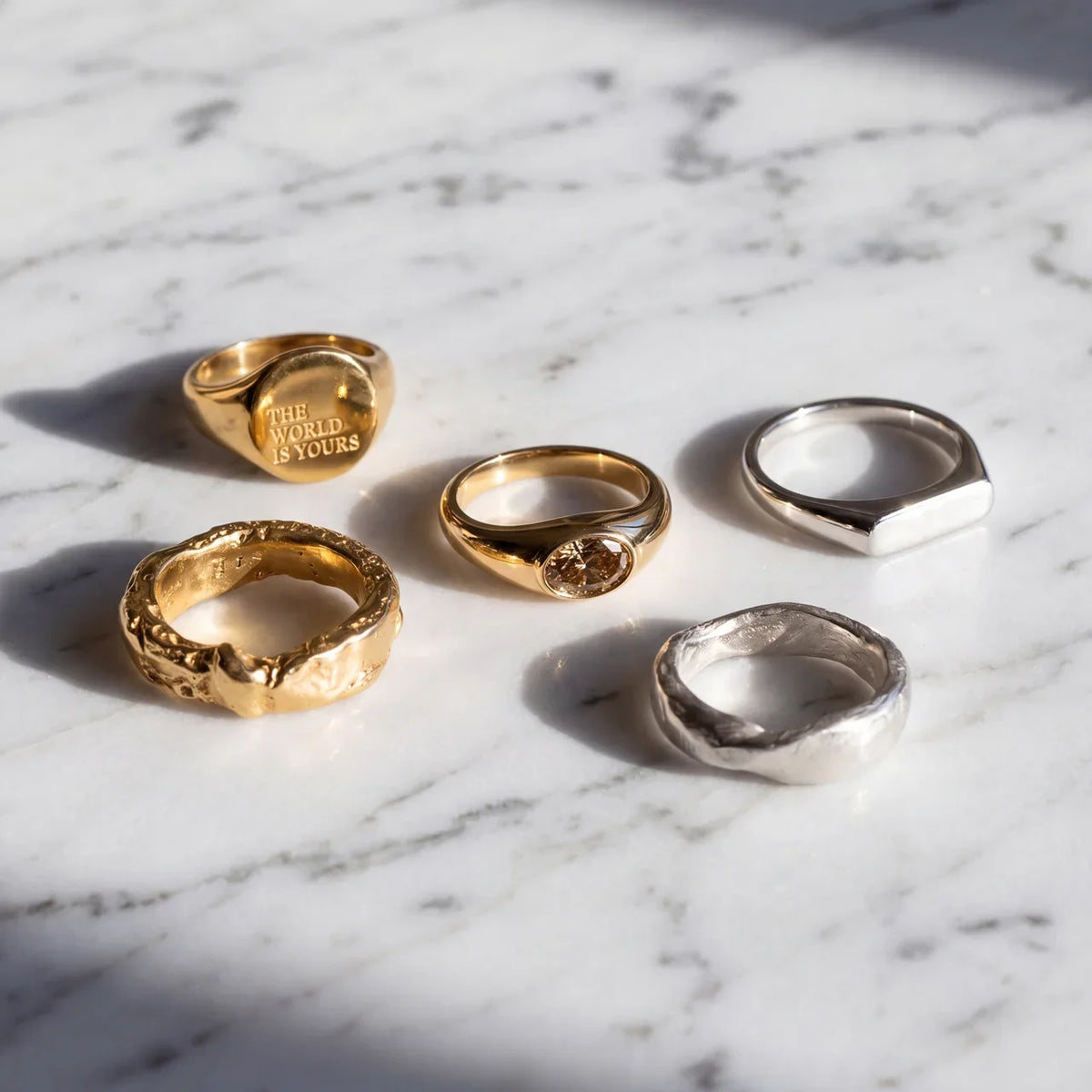
You can see the current men's gold jewellery line-up for reference as you read.
Quick answer

If you want to spend under £200 on a gold-finish men’s piece that lasts 5-10+ years and looks real because it has real 14K gold on the surface, gold filled is the strongest value option. The gold layer is thick enough to wear like solid gold for years.
If you want a piece that will be passed down generations and holds its full value as a precious-metal asset, solid gold is the only option. Hallmarked, recyclable as gold, indefinite lifespan.
For a piece in the £200-£500 range, both are valid options serving different buyer profiles.
Definitions
Solid gold definitions in UK 2026: - 9K (375): 37.5% pure gold, alloyed with copper/silver/zinc - 14K (585): 58.5% pure gold (UK uncommon, US standard) - 18K (750): 75% pure gold, alloyed with copper/silver - 22K (916): 91.6% pure gold (very soft, mostly Indian market) - 24K (999): pure gold (too soft for jewellery)
The “K” stands for karat, indicating the gold percentage. 9K and 18K are the most common UK solid gold standards. Solid gold is gold alloy throughout the piece.
Gold filled definitions in UK 2026: - 14/20 gold filled: outer layer is 14K gold, total gold weight is 1/20 (5%) of piece weight - 12/20 gold filled: outer layer is 12K gold, total gold weight is 1/20 of piece weight - 14K-rolled gold (RG): older European term, similar concept - Plating thickness: typically 100+ microns of gold bonded to brass or copper core
Gold filled is mechanically bonded, not electroplated. The gold layer is genuinely thick (vs flash plating at 0.5-1 micron) and the bond is permanent under normal wear.
For a piece you may want to insure, value, or pawn later, solid gold with UK hallmark is the only fully verified option.
Hallmarking and UK regulation

Solid gold UK hallmarking: - Required by UK law for pieces above 1g (gold) - Marks include: gold purity (375, 585, 750), Assay Office mark, sponsor’s mark, date letter - Hallmark confirms authenticity and karat - Hallmark is permanent (struck into metal)
Gold filled UK marking: - Not formally hallmarked by Assay Office - Manufacturer’s mark indicates “14/20 GF” or “GOLD FILLED” stamped on piece - No date or assay verification - Some unscrupulous sellers mislabel plated pieces as “gold filled”; verify by reputable seller
For a piece you may want to insure, value, or pawn later, solid gold with UK hallmark is the only fully verified option.
Lifespan comparison
Solid gold lifespan: - Indefinite for the gold itself (gold doesn’t tarnish or oxidise) - Wear marks possible (gold is soft, especially 18K+) - Repairable indefinitely (soldering, refinishing) - Resale value preserves over decades
Gold filled lifespan: - 10-30 years of regular wear before gold layer wears through - 100-micron gold layer is roughly 100x thicker than electroplating - Eventually the brass/copper core becomes visible at high-contact points - Not economically repairable once the core shows; piece is replaced
The lifespan difference is significant but not absolute. A gold filled chain worn daily for 15 years and properly maintained looks essentially identical to year one. A solid gold chain in the same conditions looks identical at year 50.
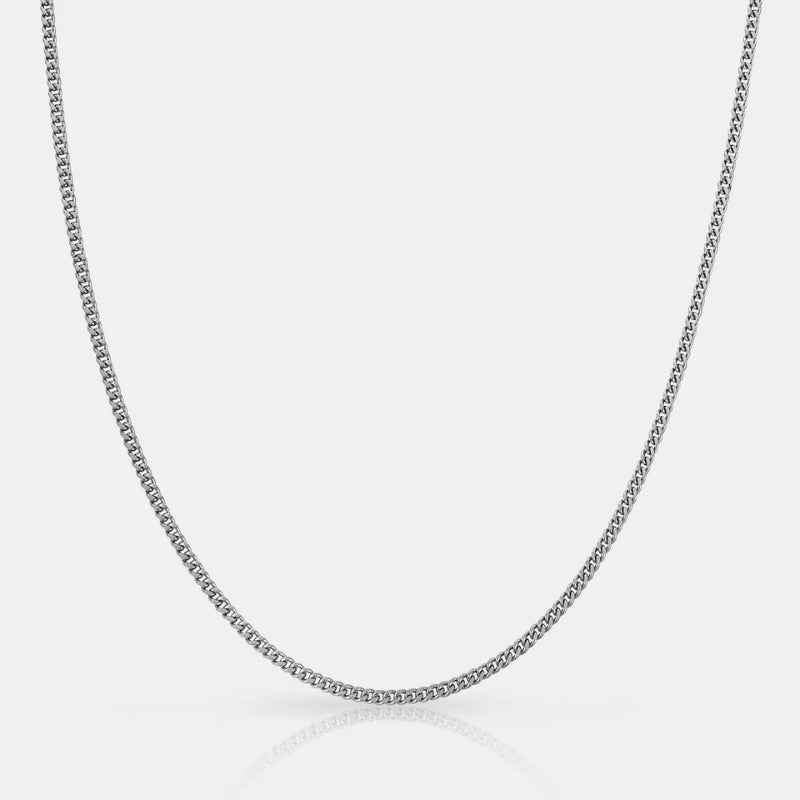
Solid gold men’s chain prices (UK 2026): - 9K solid gold 4mm Cuban 22”: £400-£800 - 14K solid gold 4mm Cuban 22”: £900-£1,800 - 18K solid gold 4mm Cuban 22”: £1,400-£2,800
Price comparison

Solid gold men’s chain prices (UK 2026): - 9K solid gold 4mm Cuban 22”: £400-£800 - 14K solid gold 4mm Cuban 22”: £900-£1,800 - 18K solid gold 4mm Cuban 22”: £1,400-£2,800
Gold filled men’s chain prices (UK 2026): - 14/20 gold filled 4mm Cuban 22”: £80-£200 - 14K-rolled gold men’s pieces: £100-£300
Gold filled is typically 1/10th to 1/5th the price of comparable solid gold pieces. The price gap reflects the actual gold content (5-10% of weight in gold filled vs 37.5-75% in solid gold).
The 25-year horizon test
Try this thought experiment.
Imagine the men’s chain you’d most want to be wearing 25 years from now. The chain has weathered everything since 2026, daily wear, gym, water, sweat, sleep, careless storage, occasional impact. What do you want it to look like?
If your answer is “essentially the same as the day I bought it, maybe a bit of character but recognisable as the same piece”, solid 14K or 18K gold is the only material that delivers. Plated chains will have lost their plating decades earlier. Gold filled chains will likely have worn through the gold layer by year 15-20. Sterling silver will have tarnished, been polished, possibly replaced. Solid gold sits at year 25 looking like a slightly more burnished version of itself.
If your answer is “I’ll have replaced it three or four times by then, with whatever was current at each replacement”, solid gold is overspecified for your wear pattern. Plated 316L or gold filled at a fraction of the cost delivers identical wear for the first 3-15 years, and you can iterate through different designs without committing to one piece for decades.
This is the most useful frame for the solid gold vs gold filled decision. It’s not about which material is “better”. It’s about your relationship to objects over time. Solid gold rewards continuity (same piece, decades). Gold filled and plated reward iteration (different pieces, evolving style).
Most British men in 2026 do iteration rather than continuity. They own 2-4 different chains across their lifetime, each lasting 3-10 years. For that pattern, solid gold isn’t the rational choice. It’s only the right choice if you want to break the iteration pattern and commit to a single piece for the long term.
Both materials are low-maintenance compared to sterling silver (which tarnishes).
Care and maintenance
Solid gold care: - Pure gold doesn’t tarnish; alloyed solid gold (9K-18K) can tarnish very slowly due to copper/silver content - Cleaning: mild soap, soft cloth, ammonia-based jewellery dip for deeper clean - Polishing: jeweller polish at 2-5 year intervals for restoration - Repair: any goldsmith can repair solid gold pieces indefinitely
Gold filled care: - Outer gold layer doesn’t tarnish under normal conditions - Avoid harsh chemicals (ammonia, bleach) which can damage the bond at the seam - Cleaning: mild soap, soft cloth only - Repair: limited; once gold layer wears through, the piece is replaced rather than repaired
Both materials are low-maintenance compared to sterling silver (which tarnishes). Both maintain colour for years with minimal effort.
Where to buy each
Solid gold UK retailers: - Hatton Garden specialists (multiple) - Goldsmiths - Beaverbrooks (premium counter) - Watches of Switzerland (premium pieces) - Online: 77 Diamonds, Steven Stone, James Allen UK
Gold filled UK retailers: - Smaller UK and European brands (search “14/20 gold filled men”) - US brands shipping to UK (Mejuri Men, Catbird, Brook & York) - Etsy specialist makers
Solid gold is more widely available in UK high-street and online retail. Gold filled is more niche, often found through smaller specialist brands.
Pick solid gold if you want: - A piece to pass down generations - Hallmarked verified authenticity - Maximum lifespan (indefinite) - Asset value preservation - The traditional luxury jewellery format
Which to pick
Pick solid gold if you want: - A piece to pass down generations - Hallmarked verified authenticity - Maximum lifespan (indefinite) - Asset value preservation - The traditional luxury jewellery format
Pick gold filled if you want: - Real gold surface at 1/10th the price of solid gold - 10-30 year lifespan (long enough for most daily wear) - A piece with genuine gold content (not just plating) - A middle ground between plated and solid gold
For UK buyers at the £40-£130 price band, neither solid gold nor gold filled is the realistic choice; PVD-plated 316L stainless steel (Monrich, Craftd) offers the gold-tone aesthetic at this price. Solid gold sits at £400+ and gold filled at £80+. Pick based on your target price band.
Browse the Monrich Cuban chain range for PVD-plated 316L pieces. See the PVD vs gold vermeil guide for plating-tier alternatives.
FAQs
Is gold filled "real gold"?
Yes, in the sense that the outer layer is genuine 14K (or 12K) gold at significant thickness (100+ microns). The piece is not solid gold throughout (the core is brass or copper) but the surface gold is real and substantial.
Will gold filled jewellery tarnish?
Not under normal wear. The 14K gold layer is the same alloy as 14K solid gold and doesn’t tarnish. Harsh chemicals (bleach, ammonia, chlorine) can damage the bond at the seam where the layers meet, exposing the base metal. Avoid these in care.
Can I get gold filled jewellery hallmarked?
No. UK hallmarking applies only to solid precious metal. Gold filled pieces are marked by the manufacturer (e.g., “14/20 GF”) but cannot receive Assay Office hallmarks because they are not solid precious metal.
Is gold filled the same as gold vermeil?
No. Gold filled has 100+ microns of mechanically bonded gold over brass or copper. Gold vermeil has 2.5+ microns of electroplated gold over sterling silver. Gold filled has roughly 40x more gold by weight than vermeil and a different bonding method.
Why is gold filled jewellery cheaper than solid gold?
Because gold filled contains roughly 5-10% gold by weight, while solid gold contains 37.5-75% gold by weight. The remaining material is brass or copper (gold filled) or alloy metals (solid gold). The price gap reflects gold content.
Where can I sell gold filled jewellery?
Limited market. Gold filled doesn’t have the gold weight to be valued by pawn shops as scrap. Some specialist buyers will pay for the gold content but at significantly lower per-gram rates than solid gold. Solid gold has a fully developed resale market; gold filled doesn’t.
Built after wearing the others.
Different by design.
PVD-plated 316L. 1-2 micron thickness declared. 12-month tarnish guarantee in writing. Permanent buy one get one free across the full catalogue.
Browse Monrich → UK shipping 2-4 days / 30-day returns / no customs