

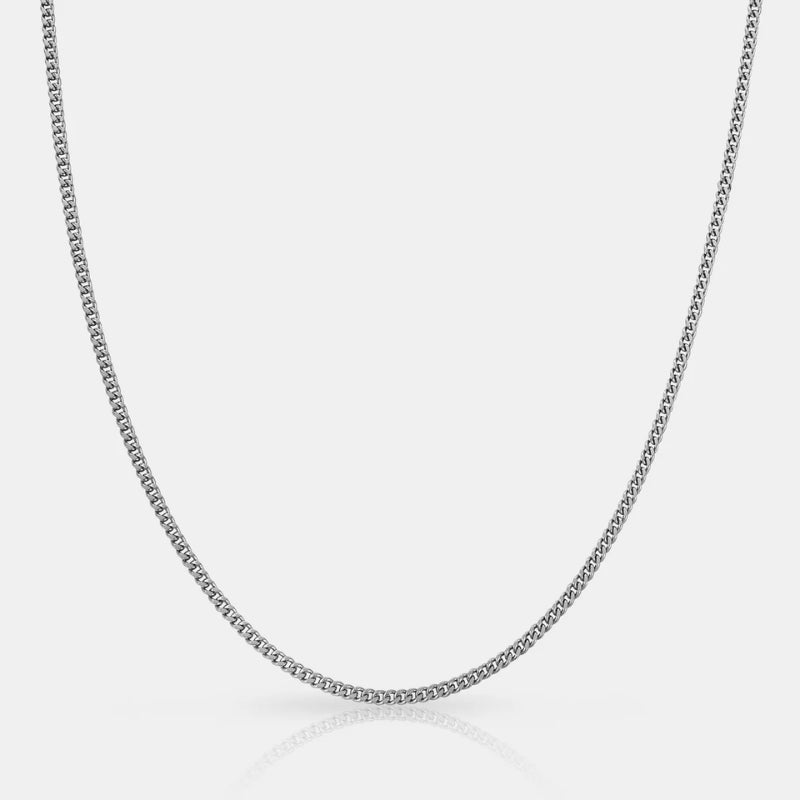
Best Men's Jewellery Sensitive Skin UK 2026
There is roughly 8 micrograms of nickel allowed to be released by a piece of jewellery per square centimetre per week under EU regulation. Anything above that is, legally, a hazard.

Most of the cheaper men’s jewellery sold online doesn’t pass this test. It isn’t tested. The brands selling it have no incentive to test it, and most UK consumers wearing it have no way to know until the skin reaction shows up. That’s why the term “hypoallergenic” on a product page is essentially marketing rather than certification: it sounds reassuring without legally meaning anything specific.
If you have sensitive skin, the implication is that you can’t trust the word “hypoallergenic” on its own. You have to look at the material itself. 316L stainless steel. Sterling silver. Titanium. Niobium. Solid gold above 14K. These materials have known nickel content profiles that either meet EU thresholds reliably or release essentially no nickel ions at all. Everything else is a gamble.
This is the honest UK guide for men with sensitive skin buying jewellery in 2026.
I run Monrich, a UK men’s jewellery brand using hypoallergenic 316L stainless steel. Disclosure up front.
You can see the current hypoallergenic men's jewellery line-up for reference as you read.
Why jewellery causes skin reactions

Nickel allergy
The most common cause. Nickel is part of many metal alloys (stainless steel, white gold, cheaper costume jewellery). When nickel ions release onto the skin, sensitised users develop a contact dermatitis reaction (Type IV immune response).
Copper / brass exposure
Cheap costume jewellery often has brass or copper alloy base. These metals can oxidise on skin (green / blue marks) and cause irritation.
Trapped moisture and bacteria
Even hypoallergenic metals can irritate skin if dirt, sebum, sweat, and bacteria are trapped between the jewellery and skin for extended periods.
Friction and pressure
Tight rings, heavy chains rubbing the neck, and bracelets that constantly move can cause mechanical irritation regardless of material.
Specific allergens (cobalt, palladium)
Less common than nickel but real. Cobalt is used in some tungsten ring binders. Palladium is in some white gold alloys.
Best materials for sensitive skin
Titanium (most hypoallergenic)
- Almost zero allergy risk
- Surgical implant grade
- Lightweight (less mechanical irritation)
- Nickel-free
- Cobalt-free (verify with manufacturer)
Trade-off: harder to manufacture, fewer design options, higher prices.
Best for: severe nickel allergy, recurring jewellery reactions, surgical implant history.
316L stainless steel
- Medical implant grade
- Nickel content in alloy but release rate well below EU regulatory threshold (typically 0.01-0.05 µg/cm²/week vs the 0.5 µg/cm²/week EU limit)
- Hypoallergenic for 95-99% of users
- Affordable and widely available
Trade-off: technically contains nickel, so 1-5% of severely allergic users may still react.
Best for: mild to moderate nickel sensitivity, most “sensitive skin” cases.
925 sterling silver
- Naturally hypoallergenic
- Precious metal base
- 7.5% alloying metal usually copper (rare copper sensitivity possible)
- Patinas with wear (cosmetic, not reactive)
Trade-off: patinates and needs occasional polish. Higher price than 316L.
Best for: sensitive skin users who want precious metal base.
Solid 18K gold (yellow gold)
- Pure gold is inert
- Yellow gold alloys with silver and copper (low allergy risk)
- Essentially no maintenance
Trade-off: premium price. Watch out for white gold which often uses nickel.
Best for: maximum investment + sensitivity safety.
Platinum
- Inert metal
- Nickel-free standard
- Lifetime durability
Trade-off: premium price (£800+).
Best for: wealthy buyers with severe nickel sensitivity who want premium material.
Trade-off: harder to manufacture, fewer design options, higher prices.
Materials to avoid

Costume / fashion jewellery (brass + plating)
The base metal can release nickel, copper, or other irritants through plating defects. The plating wears off and reveals the base. Avoid unless specifically labelled nickel-free.
Unspecified "stainless steel"
Could be 304 (more nickel release than 316L), unspecified alloys, or fashion stainless. Brands that specify “316L” are signalling controlled quality.
Vintage / antique pieces of unknown composition
Older jewellery may not meet modern EU nickel limits. Beautiful but risky for sensitive users.
White gold with nickel
Traditional white gold uses nickel as the whitening alloy. For sensitive users, choose palladium-based white gold or specifically nickel-free certified.
Tungsten with cobalt binder
Some tungsten rings use cobalt as the binder material. Cobalt can cause allergies similar to nickel. Look for “cobalt-free tungsten” or “nickel-binder tungsten”.
Mixed-alloy fashion jewellery
Pieces that combine multiple metals (Asian / Indian / African fashion jewellery with mixed alloys) can have unpredictable composition. For sensitive users, stick to single-alloy declared pieces.
Testing if you're sensitive
Symptoms of jewellery reaction
- Red, itchy rash where the metal contacts skin
- Small blisters or bumps
- Dry, cracked skin in chronic cases
- “Tattoo-like” dark mark from metal staining
Onset timing
- Mild reaction: 4-24 hours after first contact
- Severe / sensitised user: within minutes to hours
- Chronic / repeated contact: gradual buildup
Patch test
- Wear new piece on inner wrist for 24-48 hours
- If no reaction in 48 hours, generally safe to wear
- For severely sensitive users, allergy testing by dermatologist can identify specific metal sensitivities
Common test pieces
A simple sterling silver or 316L stainless piece is good for testing. If you react to these, you have broader metal sensitivity and need titanium / pure gold options.
Declared 316L stainless steel base with PVD gold plating.
Best brands for sensitive skin in UK 2026

Monrich
Declared 316L stainless steel base with PVD gold plating. EU nickel compliant. PVD coating adds extra protective layer between skin and base. Entry £25. Browse hypoallergenic pieces.
Vitaly
Titanium and 316L PVD options. Industrial design. £55-400 + UK customs.
Hatton Labs
Sterling silver base (different material tier, naturally low-allergen). Entry £150.
Miansai (US, ships UK)
Sterling silver and vermeil. Sterling base is hypoallergenic. £75-600.
Le Gramme
Solid silver and solid gold (no plating). Premium materials, maximum hypoallergenic. £200-3000+.
For titanium specifically
Niche UK titanium jewellers. Search “titanium men’s jewellery UK”. £100-500 typical.
What to watch for if you have sensitive skin
Look for jewellery that declares the base metal and the plating method. Cheap fashion jewellery with unspecified materials is the main category to avoid, since both the base metal and any coating are unknown. With any plated steel piece, once the plating layer wears at high-contact points, the base steel composition becomes the relevant question, which is why declared specs matter more than brand name.
Care tips for sensitive wearers
Keep jewellery clean
- Wipe with soft cloth weekly to remove sebum and dirt
- Mild soap + warm water for deeper cleaning monthly
- Dry thoroughly after washing
Don't wear constantly in sweat
- Take pieces off after gym / sweaty activities
- Allow skin and piece to dry completely
- For PVD-plated 316L: less critical (the plating is the barrier)
Watch for irritation early
- If you notice a new piece causing slight irritation, stop wearing it before the reaction escalates
- Don’t push through irritation hoping it will get better, sensitivity builds with continued exposure
For sweat / moisture trapping
- Loose-fitting rings and bracelets allow air circulation
- Avoid pieces that press skin in trapped pockets
After reactions
- Clean and dry skin
- Apply topical hydrocortisone if severe
- See a dermatologist for persistent reactions
- Switch to titanium or pure gold for future jewellery
Eczema sufferers often have generally reactive skin.
Specific cases (eczema, contact dermatitis)
Eczema-prone skin
Eczema sufferers often have generally reactive skin. Jewellery should: - Be hypoallergenic material (titanium, 316L, sterling, solid gold) - Be loose-fitting to allow air circulation - Avoid pieces that trap moisture (tight watch backs, ring under bands)
Confirmed nickel allergy (diagnosed)
For diagnosed nickel allergy: - Avoid 316L and similar stainless steel (small but real nickel release) - Choose titanium (zero nickel) or sterling silver or solid gold - White gold only if specifically nickel-free certified
Pediatric / family sensitivity
For families with multiple sensitive members: - Standardise on titanium or sterling for shared use - Avoid costume jewellery in the household - Educate kids on signs of reaction
Sensitive skin from medications
Some medications (especially steroids, hormone treatments) can increase skin sensitivity. May require switching to safer jewellery materials during the treatment period.
FAQ
What jewellery is best for sensitive skin?
For most sensitive users: 316L stainless steel or 925 sterling silver. For severe nickel allergy: titanium. For premium investment: solid 18K gold or platinum. All are hypoallergenic to varying degrees.
Is 316L stainless steel safe for sensitive skin?
Yes for 95-99% of nickel-sensitive users. 316L releases nickel well below the EU regulatory threshold. For the 1-5% of severely sensitive users, titanium or sterling silver are safer alternatives.
Why does my "hypoallergenic" jewellery cause a reaction?
Possible reasons: (1) the piece isn’t actually 316L or sterling (could be lower-grade alloy), (2) you have a copper sensitivity (some sterling has copper alloy), (3) the plating is degraded and base metal is showing, or (4) trapped sweat / dirt is causing irritation regardless of material.
Is titanium worth the extra cost for sensitive skin?
For severe nickel allergy or chronic skin reactions: yes. For moderate sensitivity: 316L stainless is usually fine and significantly cheaper. The cost-to-benefit of titanium depends on severity.
Can I wear PVD-plated jewellery with sensitive skin?
Yes for most users. The PVD plating is a physical barrier between the base metal (316L stainless) and your skin. As long as the plating is intact, the underlying nickel content of the steel doesn’t matter for skin contact.
Should I get tested for jewellery allergies?
If you have repeated reactions to multiple pieces or jewellery: yes, see a dermatologist for patch testing. The test can identify specific metal sensitivities (nickel, cobalt, palladium, etc.) and guide your material choices.
Built after wearing the others.
Different by design.
PVD-plated 316L. 1-2 micron thickness declared. 12-month tarnish guarantee in writing. Permanent buy one get one free across the full catalogue.
Browse Monrich → UK shipping 2-4 days / 30-day returns / no customs


