

Artículo: How to Clean Gold Plated Jewellery Men UK 2026
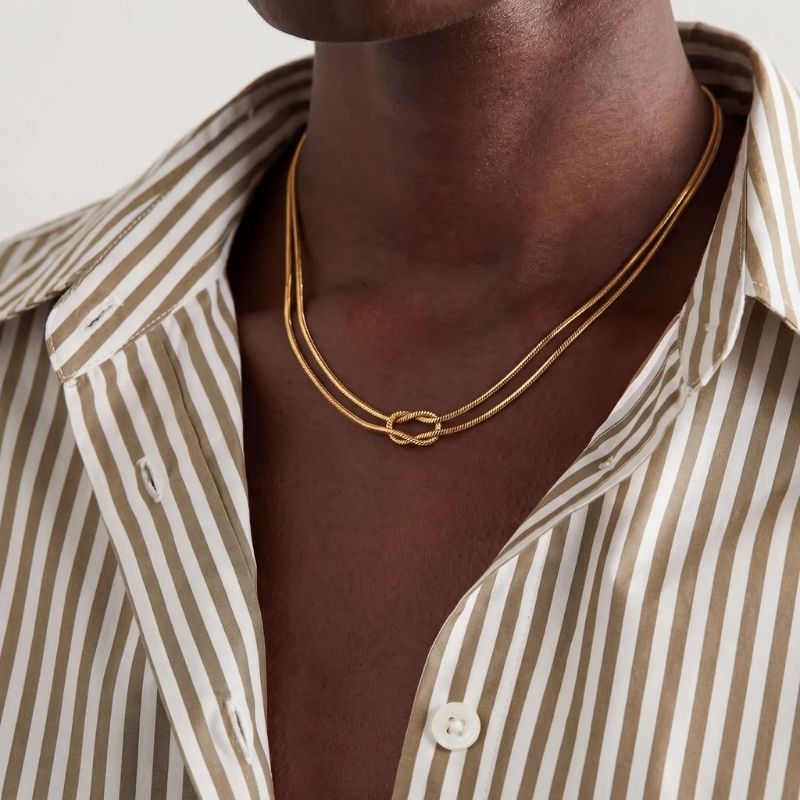
How to Clean Gold Plated Jewellery Men UK 2026
The wrong cleaning product can strip a £80 PVD-plated chain to its bare steel core in under five minutes.

That’s the risk most men don’t realise when they reach for whatever’s under the sink to clean a chain that’s gone slightly dull. Toothpaste, baking soda, vinegar, lemon juice, abrasive sponges, jewellery dips designed for solid gold, most household methods that work for solid gold or sterling silver actively damage gold plating.
This is the honest care guide for UK men’s PVD-plated and gold-plated jewellery in 2026.
I run Monrich, a UK men’s jewellery brand using PVD-plated 316L stainless steel. Disclosure first.
The safe method

Required materials: - Soft microfibre cloth - Warm (not hot) water - Mild dish soap (e.g., Fairy Liquid in small quantity) - Soft baby toothbrush (optional, for crevices) - Second dry microfibre cloth
Steps:
-
Mix solution: 1 cup warm water + 2-3 drops mild dish soap. Stir to combine, don’t froth heavily.
-
Soak briefly: place the piece in the solution for 30-60 seconds. Don’t leave overnight; extended soaking can affect plating bonds.
-
Gentle agitation: swirl the piece in the solution. If needed, use the soft baby toothbrush gently on link crevices or pendant detailing. Don’t scrub.
-
Rinse: remove from solution and rinse under cool running water for 10-20 seconds to remove soap residue.
-
Dry immediately: pat dry with first microfibre cloth, then air dry on second cloth for 5-10 minutes before storing.
This method removes daily skin oils, sweat residue, and surface dirt without affecting the plating bond. Safe to do weekly.
What to avoid

Do not use on gold-plated or PVD-plated jewellery:
- Toothpaste: abrasive, scratches plating
- Baking soda paste: abrasive, scratches and dulls plating
- Vinegar or lemon juice: acid attacks plating
- Ammonia (Windex): chemical damages plating bond
- Bleach: extreme chemical damage, instant
- Silver polishing cloths: designed for solid silver, can abrade plating
- Silver dip cleaners: contain thiourea which strips plating
- Ultrasonic cleaners (high power): can vibrate plating off the base metal
- Steam cleaners: heat can stress plating bond
- Wire brushes: scratches plating immediately
- Abrasive sponges: same problem
- Hot water above 60°C: can stress plating bond
These products are designed for solid precious metals (gold, silver, platinum) which don’t have a plating layer to damage. Used on plated jewellery, they remove the plating and expose the base metal.
Do not use on gold-plated or PVD-plated jewellery:
Daily care routine

Daily habits that extend plating life:
-
Remove before: showering, swimming, gym workout, sleeping. These four activities account for 80% of plating wear in men’s daily-wear jewellery.
-
Apply perfume, deodorant, sunscreen FIRST, then put jewellery on. Chemicals in personal care products can stress plating.
-
Wipe with soft cloth before storage: a 5-second wipe with a dry microfibre cloth before putting the piece away removes sweat and oils that cause dulling.
-
Check clasps regularly: ensure lobster clasps and box clasps are clean and functional. Failed clasps lead to lost pieces.
-
Don’t stack pieces without protection: when stacking chains or layered bracelets, ensure the pieces aren’t constantly rubbing against each other (which abrades plating).
Weekly deeper clean
Weekly cleaning routine (use the safe method above):
-
Sunday cleaning slot: pick one day per week for jewellery maintenance.
-
Soak in mild soap solution: 60 seconds per piece, as described in the safe method.
-
Gentle agitation in crevices: use soft baby toothbrush on chain links, signet ring engraving, and pendant detailing.
-
Rinse thoroughly: any soap residue can dull the finish.
-
Dry completely before storage: water trapped between chain links can cause subtle damage over time.
This weekly routine maintains plating life across years rather than months. Skipping the routine for months at a time accelerates dulling and shortens piece lifespan.
Weekly cleaning routine (use the safe method above):
Specific situations
After gym/sweat: - Wipe immediately with dry cloth - If you sweat heavily, rinse under cool water and pat dry within 30 minutes - Don’t leave sweat to dry on the piece
After swimming pool (chlorine): - Rinse immediately under fresh water for 30+ seconds - Chlorine actively damages plating; don’t let it dry on the piece - Avoid pool swimming with plated jewellery if possible
After sea water (salt): - Rinse immediately under fresh water for 30+ seconds - Salt water is also damaging to plating - Same as chlorine: avoid if possible
After exposure to soap, shampoo, body wash: - Rinse and dry promptly - These products generally less damaging than pool/sea water but still better avoided
After heavy perfume or aftershave application: - Wipe down with dry cloth - Chemicals in fragrances can react with plating over time - Apply fragrance first, then put on jewellery
Storage to prevent dulling
Best storage practices:
-
Individual pouches: each piece in its own soft pouch prevents pieces from scratching each other.
-
Anti-tarnish strips (for sterling silver mixed with plated): if storing sterling silver and plated pieces together, anti-tarnish strips protect the silver from sulphur compounds in air.
-
Cool dry place: humidity accelerates plating damage. Bathroom storage (high humidity) is the worst location for jewellery.
-
Acid-free paper or fabric: cardboard, especially acidic cardboard, can damage plating over time.
-
Climate-controlled: avoid storing in cars, attics, garages where temperature swings stress plating bonds.
For UK men’s jewellery storage in 2026, a basic dresser drawer with individual fabric pouches is sufficient. No specialist storage equipment required.
- Individual pouches: each piece in its own soft pouch prevents pieces from scratching each other.
When plating won't recover
Signs plating has worn through (not recoverable by cleaning):
- Visible base metal colour (silver-grey on PVD-plated 316L; yellow on plated brass)
- Patches of different colour on the piece
- Texture change at high-contact points
- Reaction with skin (skin discolouration, redness) where there wasn’t before
Once plating has worn through to the base metal, no cleaning method restores it. Options:
-
Send for re-plating: specialist services in UK charge £30-£80 per piece for PVD re-plating. Original manufacturer may offer this service.
-
Wear as patina’d piece: many men keep pieces with worn plating as character pieces with visible age.
-
Replace: budget-tier pieces may not be economical to re-plate vs replacing.
If your piece is from Monrich and within 12 months of purchase, the plating warranty may cover repair or replacement; check the warranty terms.
The five-minute Sunday ritual
Most plating wear in UK men’s jewellery happens not because of damage, but because of neglect.
A chain that’s never cleaned accumulates sweat, skin oils, and microscopic debris in the link crevices. Over months, this buildup hardens, attracts more debris, and creates the dulled, slightly grey appearance most men interpret as “the plating wearing off”. In reality, the plating is intact underneath; the chain just needs a proper clean.
This is the case for a Sunday ritual.
Once a week, ideally Sunday morning before the week starts, set aside five minutes. Fill a small bowl with warm water and two drops of mild dish soap. Place your daily-wear pieces in the bowl. Walk away for 60 seconds. Come back, gently swirl each piece, rinse under cool running water for 10-15 seconds, and pat dry with a soft microfibre cloth. Let pieces air dry on a clean cloth for five minutes before putting them away.
Five minutes per week. Three years of consistent cleaning later, your plating still looks essentially like new. Five minutes per week, skipped for months at a time, and the same piece looks worn through within 18 months.
The economics of this ritual are striking. A £60 PVD-plated chain at 3-year lifespan (with cleaning) costs £20 per year. The same chain at 18-month lifespan (without cleaning) costs £40 per year. The five-minute weekly ritual saves £20 per chain per year, multiplied across your collection.
Most men don’t do this because it feels disproportionate to the time investment. It isn’t. The compound effect over 3-5 years is the difference between owning the same pieces vs replacing them.
Most plating wear in UK men’s jewellery happens not because of damage, but because of neglect.
FAQs
Can I use jewellery wipes on plated jewellery?
Some yes, some no. Check the product specifically: wipes designed for “all jewellery including plated” are safe. Wipes designed for “gold and silver” usually contain abrasives or chemicals that damage plating. When in doubt, the warm soapy water method is safer.
How often should I clean plated jewellery?
Weekly with the safe method described above for daily-wear pieces. Less frequently (monthly) for pieces worn occasionally. The cleaning routine is about maintenance, not deep restoration.
My chain is dull but not worn through; can it be polished?
If the dulling is from accumulated skin oil and sweat residue (not plating wear), the safe cleaning method should restore shine. If shine doesn’t return after thorough cleaning, the dulling may be early-stage plating wear that cleaning won’t reverse.
Can I use a soft toothbrush on plated jewellery?
Yes, gently. A soft baby toothbrush (NOT a regular toothbrush, which is too stiff) can clean chain crevices and signet ring engraving without scratching. Don’t scrub; use light circular motion.
Is steam cleaning safe for plated jewellery?
No. Heat from steam cleaners can stress the plating bond and cause patches of plating to lift over time. Steam cleaning is appropriate for solid metals only.
Will lemon juice clean plated jewellery?
No. Lemon juice is acidic and will damage gold plating. The acid eats through the plating layer and exposes the base metal. Avoid all acidic cleaning methods on plated pieces.
Built after wearing the others.
Different by design.
PVD-plated 316L. 1-2 micron thickness declared. 12-month tarnish guarantee in writing. Permanent buy one get one free across the full catalogue.
Browse Monrich → UK shipping 2-4 days / 30-day returns / no customs


